
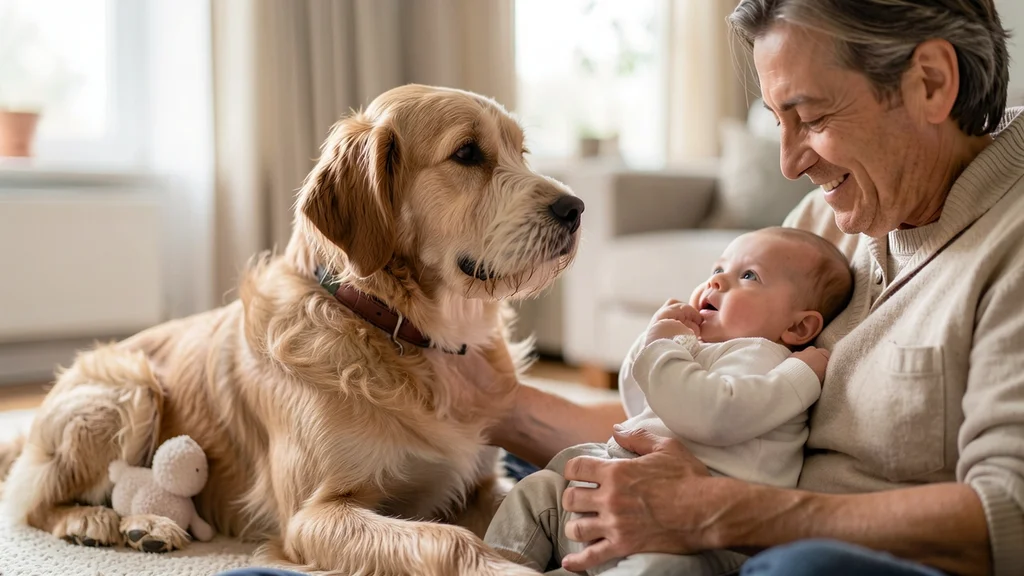
Bringing a dog into your home when you have a baby is an exciting idea, but it requires careful thought. Can you adopt a dog if you have a baby depends on factors like your lifestyle, the dog’s temperament, and how well you can balance both responsibilities. Many families successfully raise children and pets together, but preparation is key to ensuring a smooth transition.
Yes, you can adopt a dog if you have a baby, but choose a breed or temperament that matches your family’s needs. Proper introductions, supervision, and training are essential for safety and harmony.
Why Adopting a Dog With a Baby Can Work
Dogs and babies can form wonderful bonds that benefit the entire family. Studies show that children raised with pets develop stronger immune systems and emotional intelligence. According to the American Academy of Pediatrics, early exposure to dogs may reduce the risk of allergies and asthma in children.
Beyond health benefits, dogs teach kids responsibility, empathy, and companionship. A well-trained dog can also provide comfort and security for a baby as they grow. However, the key to success lies in selecting the right dog and preparing your home properly.
- Emotional benefits for children growing up with pets
- Reduced stress for parents with a well-behaved dog
- Increased physical activity for the whole family
- Social development for babies exposed to animals early
- Security having a loyal pet in the home
Tip: Start by fostering a dog before adopting to see how your baby reacts to having a pet in the home.
Best Dog Breeds for Families With Babies
Not all dogs are equally suited for homes with infants. Some breeds are naturally more patient, gentle, and tolerant of children. When considering can you adopt a dog if you have a baby, the breed’s temperament should be a top priority.
The American Kennel Club recommends breeds known for their family-friendly nature. These dogs typically have calm demeanors, high patience levels, and a natural affinity for children. However, individual temperament can vary, so always assess each dog personally.
| Breed | Temperament | Energy Level | Size |
|---|---|---|---|
| Labrador Retriever | Friendly, outgoing, gentle | High | Large |
| Golden Retriever | Patient, intelligent, loyal | High | Large |
| Cavalier King Charles Spaniel | Affectionate, gentle, adaptable | Moderate | Small |
| Beagle | Friendly, curious, good with kids | High | Medium |
| Newfoundland | Gentle giant, calm, protective | Moderate | Extra Large |
While these breeds are generally good with children, always supervise interactions between dogs and babies. Even the gentlest dog can react unpredictably if startled or provoked.
Preparing Your Home for a Dog and Baby
Safety is the top priority when introducing a dog to a home with a baby. You’ll need to create a space that’s secure for both your child and your new pet. Start by dog-proofing your home just as you would baby-proof it.
Remove hazards like small objects, toxic plants, and exposed electrical cords. Create separate spaces where your dog can retreat if they need quiet time. The Humane Society recommends using baby gates to create dog-free zones, especially in the nursery.
- Secure trash cans to prevent dogs from accessing harmful items
- Store baby supplies like diapers and wipes out of reach
- Use baby gates to create boundaries between dog and baby areas
- Keep floors clean to prevent dogs from eating dropped food or small objects
- Provide a dog bed in a quiet area where your pet can relax
- Install cabinet locks to keep dogs from accessing cleaning supplies or medications
Warning: Never leave a dog and baby unattended together, even for a moment. Accidents can happen quickly.
Introducing Your Dog to Your Baby Safely
The first introduction between your dog and baby is crucial. This meeting sets the tone for their future relationship. Plan this introduction carefully to ensure it goes smoothly for both.
Start by allowing your dog to sniff an item that has your baby’s scent, like a blanket or onesie. This helps the dog become familiar with the baby before they meet face-to-face. When it’s time for the actual introduction, keep your dog on a leash and allow them to approach the baby slowly.
| Step | Action | Timing |
|---|---|---|
| 1 | Let dog sniff baby items before meeting | 1-2 days before |
| 2 | Keep dog on leash during first meeting | First introduction |
| 3 | Allow dog to approach baby slowly | First introduction |
| 4 | Reward calm behavior with treats | During introduction |
| 5 | Supervise all interactions for first few weeks | Ongoing |
Remember that dogs can sense stress and excitement. Stay calm during the introduction to help your dog remain relaxed. If your dog shows signs of anxiety or aggression, separate them and try again later.
Training Your Dog for Life With a Baby
Proper training is essential for ensuring your dog behaves appropriately around your baby. Even well-behaved dogs may need to learn new boundaries when a baby joins the family. Basic obedience training should be your first priority.
According to the Association of Professional Dog Trainers, dogs should know basic commands like sit, stay, leave it, and come before being introduced to a baby. These commands help you control your dog in various situations. Advanced training can include teaching your dog to be gentle with the baby and to respect the baby’s space.
- Basic obedience training (sit, stay, come, leave it)
- Socialization with children (if adopting a puppy)
- Boundary training (teaching dog to stay out of certain areas)
- Gentle behavior training (teaching dog to be soft with baby)
- Noise desensitization (preparing dog for baby sounds like crying)
- Positive reinforcement for good behavior around baby
Important: Start training your dog before the baby arrives. This gives your dog time to adjust to new rules and expectations.
Signs Your Dog Is Stressed Around the Baby
Even with the best preparations, some dogs may struggle to adjust to life with a baby. It’s important to recognize the signs of stress in your dog so you can address any issues promptly. Early intervention can prevent more serious problems from developing.
The American Society for the Prevention of Cruelty to Animals (ASPCA) notes that dogs communicate stress through body language. Learning to read these signals can help you understand how your dog is feeling and when they might need a break from the baby.
| Behavior | What It Means | What to Do |
|---|---|---|
| Yawning frequently | Stress or anxiety | Give dog space, remove from situation |
| Licking lips excessively | Nervousness | Assess environment, reduce stressors |
| Avoiding eye contact | Discomfort or submission | Build positive associations with baby |
| Growling or snarling | Warning sign of aggression | Separate immediately, consult trainer |
| Excessive shedding | Stress response | Create calm environment, increase exercise |
If you notice any of these signs, take action immediately. Ignoring stress signals can lead to more serious behavioral issues. In some cases, you may need to consult a professional dog trainer or behaviorist for help.
Common Mistakes to Avoid When Adopting a Dog With a Baby
Many families make well-intentioned but costly mistakes when bringing a dog into a home with a baby. Being aware of these common pitfalls can help you avoid them and create a more harmonious transition for everyone.
One of the biggest mistakes is assuming that all dogs naturally love children. While many dogs do well with kids, each dog is an individual with their own personality and preferences. Another common error is not properly supervising interactions between the dog and baby.
- Assuming all dogs are good with kids – Always assess each dog individually based on temperament and history with children.
- Not supervising interactions – Never leave a dog and baby alone together, even for a moment.
- Neglecting your dog’s needs – Remember that your dog still needs attention, exercise, and mental stimulation.
- Forcing interactions – Let your dog approach the baby at their own pace. Never force them to interact.
- Ignoring stress signals – Pay attention to your dog’s body language and address any signs of discomfort.
- Skipping training – Proper training is essential for teaching your dog how to behave around your baby.
- Not preparing your home – Dog-proof your home just as you would baby-proof it to prevent accidents.
Tip: Involve the whole family in the dog’s care. This helps distribute responsibility and ensures the dog gets enough attention.
Adopting vs Buying a Dog When You Have a Baby
When considering can you adopt a dog if you have a baby, one of the first decisions you’ll face is whether to adopt from a shelter or buy from a breeder. Both options have their pros and cons, especially when you have a baby at home.
Adopting a dog from a shelter can be a wonderful option. Shelter dogs often come with some basic training and socialization. However, their history may be unknown, which can make it harder to predict how they’ll react to a baby.
Buying from a reputable breeder allows you to choose a breed known for being good with children, but it can be more expensive.
| Factor | Adopting from Shelter | Buying from Breeder |
|---|---|---|
| Cost | Lower initial cost | Higher initial cost |
| Breed predictability | Unknown or mixed breed | Known breed and temperament |
| Health history | May be unknown | Known health history of parents |
| Training | May have some basic training | Starts with a clean slate |
| Temperament | May need assessment | Breed-specific traits known |
| Availability | Immediate | May require waiting |
If you choose to adopt, look for shelters that offer temperament testing. Many shelters can help match you with a dog that’s likely to do well with children. If you prefer to buy from a breeder, do your research to find one who prioritizes health and temperament.
Frequently Asked Questions
Is it safe to have a dog with a newborn baby?
Yes, it can be safe if you take proper precautions. Always supervise interactions between your dog and baby, and ensure your dog is well-trained and comfortable around children. Start with short, controlled introductions and gradually increase their time together as your dog shows positive behavior.
What age is best to introduce a dog to a baby?
The best age depends on both the dog and the baby. Puppies can be introduced to babies as young as 8 weeks old, but they require extensive training and supervision. Older dogs with known temperaments may be easier to introduce.
For babies, waiting until they’re a few months old can make the transition smoother.
How do I know if my dog will be good with my baby?
Look for signs like calm behavior around children, gentle interactions, and a relaxed demeanor. A dog that’s good with babies typically shows patience, tolerance for noise, and a willingness to follow commands. Consider having your dog evaluated by a professional trainer or behaviorist before bringing your baby home.
What should I do if my dog doesn’t like my baby?
If your dog shows signs of discomfort or aggression around your baby, separate them immediately. Consult a professional dog trainer or behaviorist for help. Never force interactions between a dog and baby if the dog seems stressed or unhappy.
It may take time for your dog to adjust to the new family member.
Can I adopt a dog while pregnant?
Yes, you can adopt a dog while pregnant, but consider the timing carefully. Adopting a dog a few months before your due date gives you time to train the dog and establish routines before the baby arrives. However, avoid adopting a new dog in the final weeks of pregnancy or immediately after giving birth, as this can be overwhelming.
Final Thoughts
Adopting a dog when you have a baby is possible and can be incredibly rewarding for your family. The key is careful preparation, choosing the right dog, and ensuring both your pet and child are safe and comfortable. With proper training, supervision, and a thoughtful approach to introductions, many families successfully create harmonious homes with both dogs and babies.
Remember that every dog is unique, so take the time to find the perfect match for your family’s lifestyle and needs.