
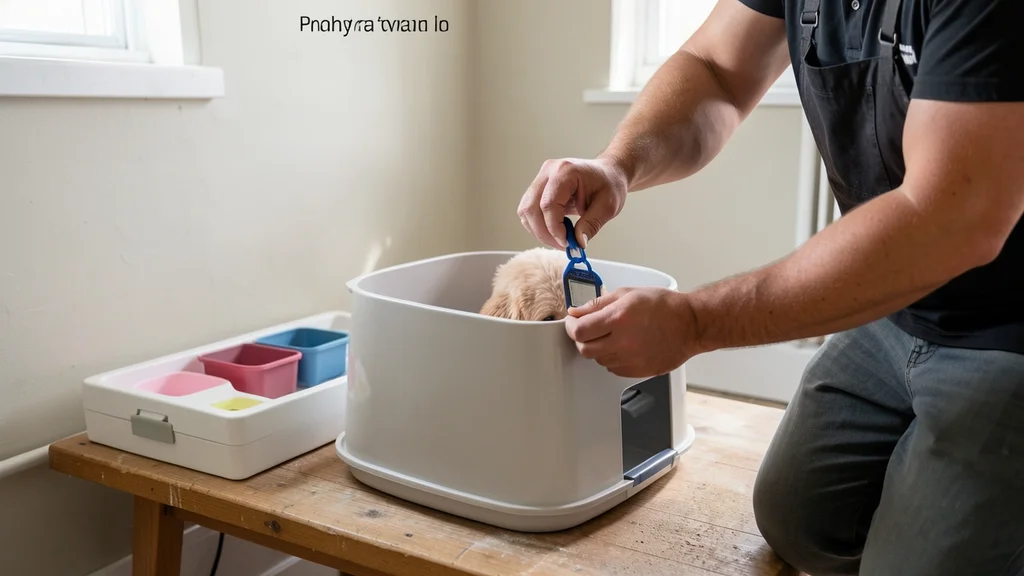
If your furry friend struggles with outdoor potty breaks, how to train a dog to use an indoor potty box might be the solution you need. Indoor potty training offers convenience, especially for small breeds, senior dogs, or those living in apartments. This guide covers everything from choosing the right setup to troubleshooting common issues.
Training a dog to use an indoor potty box requires patience and consistency. Start by introducing the box in a quiet area, using positive reinforcement like treats and praise when your dog uses it correctly.
What You Need for Indoor Potty Training
Before you begin, gather the right supplies to make the process smoother. The correct tools can significantly impact your success rate.
An indoor potty box should be large enough for your dog to comfortably turn around in. For smaller breeds, a shallow plastic tray with a grate works well. Larger dogs may need a deeper box or even a synthetic grass patch.
- Potty Box: Choose a size appropriate for your dog’s breed. Plastic trays or grass patches are popular options.
- Absorbent Pads: Use pee pads or synthetic grass mats designed for indoor use.
- Cleaning Supplies: Enzymatic cleaners to remove odors and prevent repeat accidents.
- Treats: High-value rewards for positive reinforcement.
- Leash: Useful for guiding your dog to the potty area during initial training.
- Clicker (Optional): Helps with precise timing for reward-based training.
Tip: If your dog is hesitant, place a small amount of their urine or feces in the potty box to signal its purpose.
Choosing the Right Location for the Potty Box
Location plays a crucial role in successful indoor potty training. The spot should be easily accessible, quiet, and away from your dog’s sleeping or eating areas.
Dogs naturally avoid soiling their living spaces, so placing the potty box in a low-traffic area helps them feel comfortable. A bathroom corner, laundry room, or a designated space on a balcony can work well.
- Quiet Area: Choose a spot with minimal distractions to help your dog focus.
- Easy Access: Ensure your dog can reach the box without obstacles, especially for puppies or senior dogs.
- Away from Food and Water: Keep the potty box far from feeding areas to avoid contamination.
- Consistent Spot: Once you choose a location, stick with it to avoid confusing your dog.
| Location Type | Pros | Cons |
|---|---|---|
| Bathroom Corner | Easy to clean, private | Limited space for larger dogs |
| Laundry Room | Spacious, low traffic | May have noise from appliances |
| Balcony | Good ventilation, outdoor feel | Weather-dependent |
The right location can make or break your training efforts. Observe your dog’s behavior to see where they naturally gravitate toward for elimination.
Step by Step Training Process
Training your dog to use an indoor potty box involves patience and consistency. Follow these steps to ensure a smooth transition.
Step 1: Introduce the Potty Box
Place the potty box in the chosen location and let your dog explore it. Use treats and praise to create a positive association. If your dog sniffs or steps into the box, reward them immediately.
Step 2: Use a Cue Word
Choose a cue word or phrase like “Go potty” or “Do your business.” Use this consistently when guiding your dog to the box. Over time, they will associate the word with the action.
Step 3: Monitor and Guide
Keep an eye on your dog for signs they need to go, such as sniffing, circling, or whining. When you notice these signs, gently guide them to the potty box using the leash and cue word.
Step 4: Reward Success
Every time your dog uses the potty box correctly, reward them with treats, praise, or playtime. Positive reinforcement is key to reinforcing the desired behavior.
Step 5: Clean Accidents Properly
If your dog has an accident outside the box, clean it thoroughly with an enzymatic cleaner to remove odors. Avoid using ammonia-based cleaners, as they can smell like urine to dogs and encourage repeat accidents.
Warning: Never punish your dog for accidents. This can create fear and set back your training progress.
Common Mistakes to Avoid
Even with the best intentions, many dog owners make mistakes that can hinder training. Being aware of these pitfalls can help you avoid them.
- Inconsistent Location: Moving the potty box frequently confuses your dog. Stick to one spot.
- Skipping Rewards: Failing to reward your dog for using the box correctly can slow down progress.
- Using the Wrong Cleaner: Household cleaners with strong smells can deter your dog from using the box.
- Ignoring Signs: Not paying attention to your dog’s cues can lead to accidents.
- Overwhelming Your Dog: Introducing too many changes at once can stress your dog out.
| Mistake | Why It’s a Problem | Solution |
|---|---|---|
| Inconsistent Location | Confuses the dog | Choose one spot and stick to it |
| Skipping Rewards | Lacks motivation | Always reward correct behavior |
| Using the Wrong Cleaner | Deters the dog | Use enzymatic cleaners |
Avoiding these mistakes can save you time and frustration. Consistency and positive reinforcement are the keys to success.
Best Indoor Potty Box Options
Not all indoor potty boxes are created equal. The right choice depends on your dog’s size, breed, and preferences.
1. Plastic Tray with Grate
This is a popular option for small to medium-sized dogs. The grate allows urine to pass through to a collection tray below, keeping your dog dry.
- Easy to clean
- Affordable
- Works well for puppies
Important: Replace the absorbent pad regularly to prevent odors.
Best For: Small breeds, puppies, and budget-conscious owners.
2. Synthetic Grass Patch
These patches mimic real grass, making them a great transition tool for dogs used to outdoor potty breaks.
- Natural feel for dogs
- Easy to clean with water and mild soap
- Durable and long-lasting
Best For: Dogs that prefer the feel of grass under their paws.
3. Portable Indoor Potty
Ideal for travel or multi-pet households, these portable options are lightweight and easy to move.
- Compact and easy to store
- Great for apartments or small spaces
- Can be used indoors and outdoors
Best For: Frequent travelers or those with limited space.
How to Transition from Outdoor to Indoor Potty Training
If your dog is used to going outside, transitioning to an indoor potty box can be challenging. Gradual changes and positive reinforcement can ease the process.
- Start Slowly: Begin by placing the potty box near the door your dog uses to go outside. This helps them associate the box with their usual potty spot.
- Use Familiar Cues: Continue using the same cue word or phrase you used for outdoor potty breaks.
- Gradually Move the Box: Over time, slowly move the box to its permanent location, a few inches at a time.
- Reward Consistently: Praise and treat your dog every time they use the indoor box correctly.
- Limit Outdoor Access: Reduce outdoor potty breaks gradually to encourage indoor use.
Tip: If your dog resists, try placing a small amount of their urine in the box to signal its purpose.
Troubleshooting Common Issues
Even with the best training methods, issues can arise. Here’s how to address some of the most common problems.
Dog Avoids the Potty Box
If your dog refuses to use the box, it might be due to the location, the type of box, or stress. Try moving the box to a quieter area or switching to a different type, such as a grass patch instead of a plastic tray.
Accidents Outside the Box
Accidents can happen, especially during the early stages of training. Clean up thoroughly with an enzymatic cleaner and redouble your efforts to monitor your dog’s cues.
Dog Uses the Box but Also Goes Outside
This is common during the transition period. Gradually reduce outdoor potty breaks while continuing to reward indoor use. Consistency is key.
Odor Problems
Regular cleaning is essential to prevent odors. Use absorbent pads and replace them frequently. Enzymatic cleaners can help neutralize lingering smells.
| Issue | Possible Cause | Solution |
|---|---|---|
| Avoids the Box | Wrong location or box type | Try a different spot or box |
| Accidents Outside Box | Not monitoring cues | Pay closer attention to signs |
| Odor Problems | Infrequent cleaning | Clean regularly with enzymatic cleaner |
Frequently Asked Questions
How long does it take to train a dog to use an indoor potty box?
The time it takes varies depending on your dog’s age, breed, and previous training. Some dogs pick it up in a few days, while others may take a few weeks. Consistency and patience are key.
Can older dogs learn to use an indoor potty box?
Yes, older dogs can learn, but it may take a bit longer. Use the same positive reinforcement techniques and be patient. Older dogs may need more time to adjust to new routines.
What if my dog eats the absorbent pads?
If your dog shows interest in chewing or eating the pads, switch to a different type of absorbent material or use a potty box with a grate to keep the pads out of reach.
Is it possible to train a dog to use both indoor and outdoor potty options?
Yes, many dogs can learn to use both. Start by training them to use the indoor box, then gradually reintroduce outdoor potty breaks with the same cue word.
How often should I clean the indoor potty box?
Clean the box daily to prevent odors and keep it inviting for your dog. Replace absorbent pads or grass patches as needed, and deep clean the box with an enzymatic cleaner weekly.
Final Thoughts
Training your dog to use an indoor potty box is a practical solution for many pet owners. With the right supplies, a consistent approach, and plenty of patience, most dogs can learn this new habit. Remember to celebrate small victories and stay consistent with your training methods.