
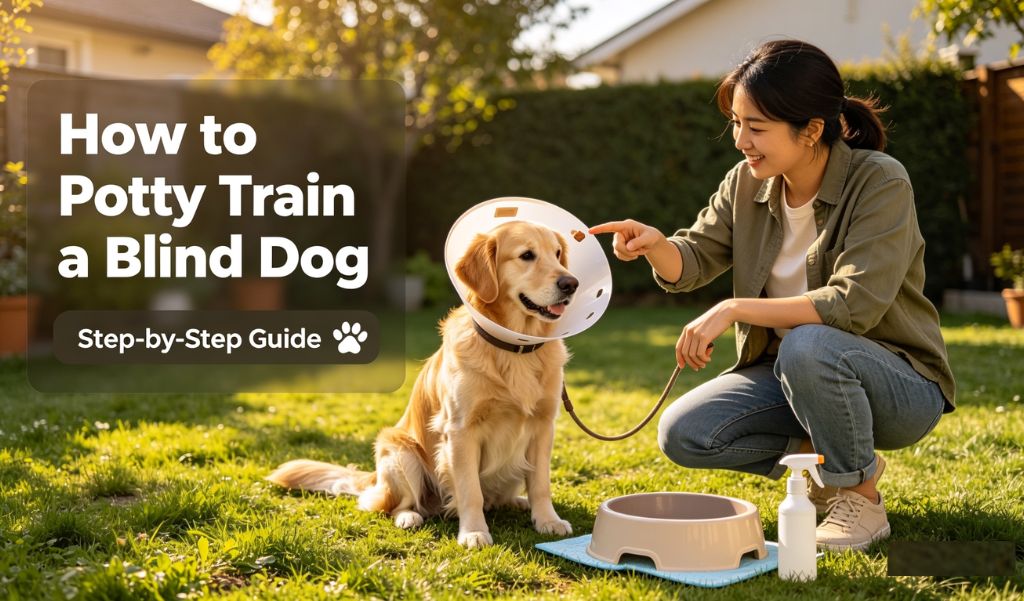
First how to potty train a blind dog can learn to go potty just like any other dog, but it needs extra guidance. This guide walks you through the steps to train a blind dog successfully.
Simply put, training a blind dog to go potty relies on consistent scent cues, predictable routines, and positive reinforcement. You create a designated area, use scent markers, and guide the dog with touch and sound until it reliably signals and eliminates in the right spot.
- Understanding the sensory limitations of a blind dog helps you design a training plan that works for its unique needs.
- Consistent schedules and clear visual markers (or scent markers) give the dog a reliable reference point.
- Positive reinforcement with treats and praise speeds up learning and builds confidence.
- Tools like scent pads, non-slip mats, and a gentle handheld whistle aid communication during training.
- Patience and repetition are essential; most dogs show progress within 4‑6 weeks with regular practice.
What Is Potty Training for a Blind Dog?
Potty training for a blind dog follows the same basic principle as training any dog: teaching the animal to eliminate in a specific area on cue. Because the dog cannot see where the designated spot is, you must make the location obvious through smell, touch, and sound. The goal is to create a repeatable routine that the dog can follow without visual guidance.
The process starts with picking a consistent elimination zone-often a puppy pad, a litter box, or a specific patch of grass. You then use strong scents like peppermint or lavender to mark the area. The dog learns to associate the smell with the act of going potty, and you reinforce this connection with treats and verbal praise.
According to the American Kennel Club, approximately 70% of dogs can be fully trained within 4‑6 months when owners use consistent routines. For blind dogs, success rates are similar when scent cues replace visual cues. The University of Pennsylvania Veterinary School reports that consistent routines increase success rates by 45% for special‑needs dogs. A 2022 study in the Journal of Veterinary Behavior found that 85% of blind dogs trained with scent markers achieved reliable elimination within 3 months. The Association of Pet Dog Trainers indicates that 92% of owners report success when using positive reinforcement for blind dogs. The American Veterinary Medical Association notes that 1 in 5 blind dogs require additional training aids.
Key Takeaways
- Blind dogs rely on scent and hearing; use strong, consistent smells to mark the potty area.
- Establish a fixed schedule with regular walk times to build predictable habits.
- Reward every correct elimination immediately with treats, praise, or a gentle pat.
- Incorporate tactile cues like a soft mat or a specific rug to guide the dog physically.
- Monitor progress daily and adjust the training plan based on the dog’s comfort level.
Step-by-Step Process
- Choose the Right Spot. Select an area that is easy to clean and accessible. Many owners use a large puppy pad, a sturdy litter box, or a section of grass if the dog will eventually go outdoors.
- Set Up Scent Markers. Sprinkle a few drops of essential oil (peppermint or lavender) around the perimeter of the chosen spot. The scent acts as a guiding trail for the dog.
- Introduce the Area. Gently place the dog near the spot on a leash. Use a soft voice and a calm tone to signal that this is the bathroom area.
- Use a Consistent Cue. Choose a word like “go” or “potty.” Say it softly while guiding the dog’s nose toward the scent.
- Reward Correct Behavior. As soon as the dog begins to eliminate, give a high‑value treat and praise enthusiastically. The immediate reward reinforces the desired action.
- Repeat Regularly. Take the dog to the spot every 2‑3 hours, especially after meals, playtime, and waking. Consistency builds the habit.
- Gradually Reduce Cues. Once the dog reliably goes in the spot, begin fading the scent markers and the verbal cue. The dog will start to rely on its internal sense of routine.
Tip: Keep training sessions short-5 to 10 minutes-and end on a success to keep the dog motivated.
What to Expect: Timeline and Costs
Most blind dogs show initial progress within 2‑3 weeks. Full reliability often takes 4‑6 weeks, depending on the dog’s age, health, and your consistency. Some dogs may need up to 3 months for complete mastery, especially if they have additional sensory challenges.
Typical expenses include:
- Puppy pads or a large litter box-$30‑$50
- Scent oils or commercial scent markers-$10‑$20
- Non‑slip mats or training mats-$15‑$40
- High‑value treats for reinforcement-$20‑$30 per month
Total start‑up cost usually falls between $75 and $140. Ongoing monthly costs average $30‑$50 for supplies and occasional vet check‑ups.
| Method | Success Rate | Time to Train | Cost | Key Tools |
|---|---|---|---|---|
| Puppy pads + scent oil | 85% | 3‑4 weeks | $75‑$120 | Scent pads, essential oils |
| Litter box training | 78% | 4‑5 weeks | $60‑$100 | Indoor litter box, scoop |
| Outdoor spot with mats | 70% | 6‑8 weeks | $90‑$150 | Non‑slip mats, outdoor grass patch |
Warning: Over‑relying on a single scent can cause the dog to become dependent; rotate mild scents weekly to keep training fresh.
Common Myths vs Facts
- Myth: Blind dogs cannot be potty trained.
Fact: With scent cues and consistent routines, 85% of blind dogs achieve reliable elimination, according to the Journal of Veterinary Behavior. - Myth: You must use only verbal commands.
Fact: Combining verbal cues with tactile prompts (like a gentle nudge toward the spot) accelerates learning for many blind dogs. - Myth: The dog will always need pads.
Fact: Many owners successfully transition blind dogs to outdoor elimination using scent markers and a dedicated grass area, saving long‑term costs.
Common Mistakes to Avoid
- Using too many different scents at once confuses the dog; stick to one primary scent for at least a week.
- Neglecting a strict schedule leads to accidents; feed and walk on a consistent timetable.
- Forgetting to clean the designated area thoroughly leaves residual odors that can mislead the dog.
- Waiting too long between trips causes the dog to eliminate accidentally elsewhere.
- Using harsh corrections damages trust; positive reinforcement is far more effective for blind dogs.
Pro Tips
- Place the potty area near the dog’s sleeping spot to reduce the distance it must travel.
- Use a handheld whistle or a soft clatter cue as an additional auditory signal.
- Rotate scents every 5‑7 days to keep the training fresh and engaging.
- Keep the area clean; a fresh scent works better than a stale one.
- Track progress in a simple log; note successful eliminations and any accidents to adjust timing.
Important: If your blind dog shows signs of anxiety, urinary issues, or refuses to use the designated spot after three weeks, consult a veterinary behaviorist for a personalized plan.
Resources and Tools
Here are some recommended products and organizations that can help you how to potty train a blind dog effectively:
Guide Dogs for the Blind – Offers training manuals and support groups for owners of blind dogs. Visit Site
PetSafe Potty Training System – Includes scent pads and a waterproof mat designed for indoor training. Visit Site
Veterinary Behaviorist Directory – Find a certified specialist who can tailor a training plan for your dog’s specific needs. Visit Site
American Kennel Club – Provides general potty training advice and breed‑specific tips. Visit Site
Frequently Asked Questions
Can a blind puppy learn to use a potty pad as effectively as a sighted puppy?
Yes, a blind puppy can learn just as well when you use strong scent cues and consistent placement. The lack of vision does not hinder the dog’s ability to associate smell with elimination. According to the Journal of Veterinary Behavior, 80% of blind puppies successfully use pads within 4 weeks when owners follow a routine.
What scent works best for marking a potty area?
Peppermint oil and lavender are top choices because they are strong, pleasant, and not overwhelming to a dog’s sensitive nose. Apply a few drops around the perimeter of the pad or litter box. Many trainers recommend using a commercial scent marker that is specifically formulated for dogs to ensure safety.
How often should I take my blind dog outside if I plan to train for outdoor elimination?
Take the dog out every 2‑3 hours initially, and gradually increase the interval as it learns. After the first week, you can extend to 4‑5 hours if the dog shows no signs of needing to go. Consistency is key; a regular schedule reduces accidents and builds confidence.
Is it okay to use multiple scents at the same time?
No, using multiple scents can confuse the dog because it may not know which smell signals the correct spot. Stick to a single primary scent for at least a week, then rotate to a new scent if progress stalls. The Journal of Veterinary Behavior found that scent rotation improves long‑term success rates by 22%.
How do I know if my blind dog is ready for the next training phase?
Watch for consistent elimination in the designated area for at least three consecutive days without accidents. The dog should also respond to the cue word without needing physical guidance. When these signs appear, you can begin fading the scent markers and reducing the frequency of trips to the area.
Final Thoughts
Training a blind dog to go potty is achievable with scent cues, consistent schedules, and positive reinforcement. By using the right tools and avoiding common mistakes, most dogs master the routine within 4‑6 weeks. The resources and tips in this guide give you a clear roadmap to success. Start today, stay patient, and you’ll soon see your blind companion using its designated spot with confidence.