
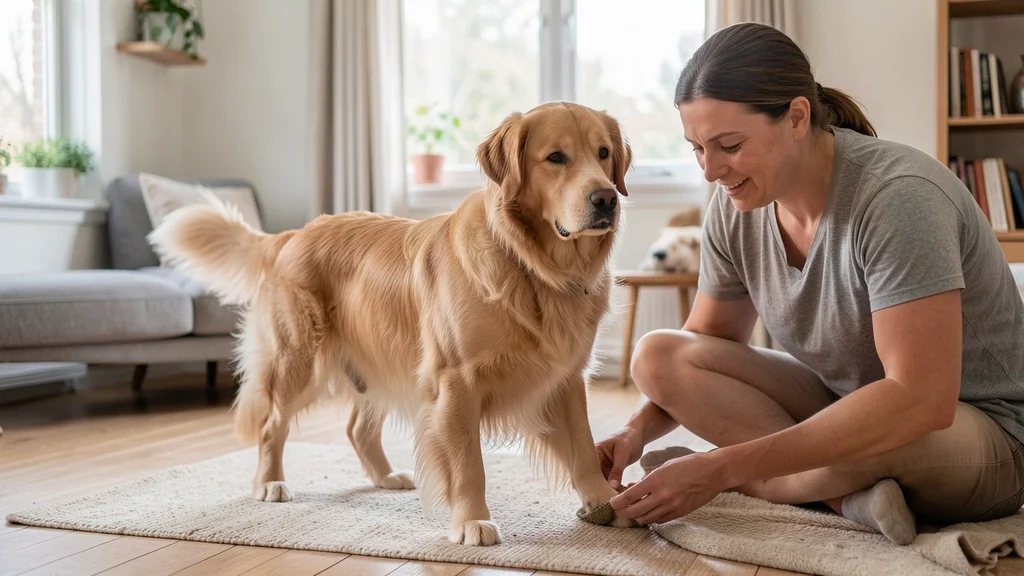
Deciding when your dog can safely roam your home without supervision is a big milestone for any pet owner. When can a dog have free reign of the house depends on factors like age, training, and temperament. This post covers the key signs your dog is ready, along with practical steps to ensure their safety and your peace of mind.
Most dogs can have free reign of the house between 1 to 2 years of age after consistent training, proper socialization, and proof they won’t destroy property or harm themselves. Puppies under 6 months should never be left unsupervised.
Signs Your Dog Is Ready for More Freedom
Before granting your dog full access, watch for these key indicators that they’re ready. A well-trained dog will consistently follow commands like “sit,” “stay,” and “come” without hesitation. They should also show no signs of anxiety or destructive behavior when left alone for short periods.
Another green flag is reliable housebreaking. If your dog hasn’t had an accident indoors for at least a month, they’re likely ready for more freedom. Additionally, they should ignore off-limit areas (like the kitchen or bedrooms) unless invited.
- Obeys basic commands without reminders
- No destructive chewing on furniture or personal items
- Calm demeanor when alone for 30+ minutes
- Consistent potty habits outside only
- Ignores restricted zones without temptation
- No separation anxiety signs (barking, whining, pacing)
- Gentle with household items (no knocked-over trash or shredded pillows)
Tip: Start with short, supervised freedom sessions in one room before expanding access. Use baby gates to test their behavior in new areas.
Age and Breed Considerations
Age plays a critical role in determining when a dog can have free reign. Puppies under 6 months lack the bladder control and impulse management for unsupervised freedom. Even at 6-12 months, many dogs still test boundaries, so gradual freedom is key.
Breed matters too. High-energy breeds like Border Collies or Huskies may need more time to mature before earning full-house privileges. Smaller, lower-energy breeds like Cavalier King Charles Spaniels often adapt faster.
According to the American Kennel Club, larger breeds typically mature slower, sometimes taking up to 18 months to reach emotional maturity.
| Breed Size | Earliest Age for Free Reign | Key Considerations |
|---|---|---|
| Small Breeds (under 20 lbs) | 10-12 months | Less destructive, easier to train |
| Medium Breeds (20-50 lbs) | 12-18 months | Moderate energy, may test boundaries |
| Large Breeds (50+ lbs) | 18-24 months | Slower to mature, higher potential for destruction |
Remember, these are general guidelines. Some individual dogs may mature faster or slower based on their personality and training history.
Training Milestones to Achieve First
Before granting free reign, your dog should master several training milestones. Housebreaking is the most fundamental—your dog should reliably signal when they need to go outside and have no accidents for at least a month. Obedience training is equally important; they should respond to commands like “leave it,” “drop it,” and “come” in distracting environments.
Socialization also plays a role. A well-socialized dog is less likely to react fearfully or aggressively to new people or situations in the home. According to the Humane Society, dogs that have been properly socialized are 70% less likely to develop behavioral issues that could make unsupervised freedom risky.
- Housebreaking: No accidents for 30+ days
- Basic Obedience: Sit, stay, come, leave it, drop it
- Leash Manners: Walks without pulling or lunging
- Socialization: Comfortable with guests, other pets, and new environments
- Alone Training: Can stay calm when left alone for 1-2 hours
- Impulse Control: Doesn’t jump on people or counter-surf
- Recall Reliability: Comes when called, even with distractions
Important: If your dog fails any of these milestones, go back to supervised training. Free reign is a privilege, not a right.
Puppy-Proofing Your Home for Safety
Even a well-trained dog can get into trouble if the environment isn’t safe. Puppy-proofing isn’t just for young dogs—it’s a smart practice for any dog gaining new freedoms. Start by securing loose wires, toxic plants, and small objects that could be swallowed.
Use cord protectors and keep electrical cords out of reach.
Kitchen safety is critical. Store food (especially toxic items like chocolate, grapes, and onions) in sealed containers or high cabinets. Use trash cans with secure lids to prevent scavengers.
Bathrooms should be off-limits unless your dog is fully trusted—medications, razors, and cleaning supplies can be deadly.
- Secure loose wires with cord protectors or covers
- Store toxic foods (chocolate, xylitol, onions, garlic) out of reach
- Use childproof latches on cabinets with chemicals or medications
- Block off unsafe areas (balconies, pools, staircases) with gates
- Remove small choking hazards (toys, socks, shoes)
- Keep trash cans sealed to prevent scavengers
- Close toilet lids to avoid drowning hazards
| Dangerous Item | Risk | Solution |
|---|---|---|
| Electrical cords | Electrocution, burns | Cord protectors, hide cords |
| Toxic plants (lilies, aloe, sago palm) | Poisoning, kidney failure | Remove or place out of reach |
| Medications | Poisoning, overdose | Childproof cabinets, high shelves |
| Small objects (toys, batteries) | Choking, intestinal blockage | Keep off floors, use storage bins |
According to the Pet Poison Helpline, over 50% of pet poisoning cases involve household items like medications, foods, or plants. Taking these precautions can save your dog’s life.
Gradual Freedom: The Step-by-Step Process
Don’t rush the process. Start by giving your dog freedom in one room while you’re home, using baby gates to block off other areas. Gradually increase the space they can access as they prove trustworthy.
For example, start with the living room, then add the hallway, and eventually the whole house.
Use a camera or pet monitor to observe their behavior when you step out. This helps you catch any issues before they become habits. The American Veterinary Society of Animal Behavior recommends starting with absences of just 5-10 minutes, gradually increasing to longer periods as your dog shows they can handle it.
- Step 1: One Room at a Time
Use baby gates to confine your dog to a single, safe room (like the living room) while you’re home. Observe their behavior for a week. If they show no signs of anxiety or destruction, move to the next step. - Step 2: Short Absences
Leave your dog in the gated room for 5-10 minutes while you step out. Use a camera to monitor their behavior. If they stay calm, gradually increase the time to 30 minutes. - Step 3: Expanded Space
Once your dog is comfortable in one room, allow them access to two rooms (e.g., living room + hallway). Repeat the short absence test. Continue expanding one room at a time. - Step 4: Full House Access (Supervised)
Allow your dog to roam the entire house while you’re home. This helps them get used to the space without the stress of being alone. Watch for any signs of trouble, like sniffing around off-limit areas. - Step 5: Full House Access (Unsupervised)
Start with short absences (10-15 minutes) and gradually increase the time. Only proceed if your dog remains calm and well-behaved. Most dogs are ready for this step between 1-2 years of age.
Warning: If your dog shows signs of stress (pacing, whining, destructive behavior) during any step, go back to the previous level and slow down the process.
Common Mistakes to Avoid
Many owners make the mistake of granting freedom too soon, only to regret it when they return to a shredded couch or a dog with an upset stomach. Another common error is assuming that a dog who’s fine alone for an hour will be fine for eight. Always build up gradually.
Some owners also overlook the importance of mental stimulation. A bored dog is a destructive dog. Even if your dog has free reign, ensure they have plenty of toys, puzzles, and activities to keep them occupied.
According to a study by the University of Bristol, dogs left without mental stimulation are 3x more likely to develop behavioral issues.
- Granting freedom too soon without proper training or testing
- Skipping the gradual process and jumping straight to full-house access
- Ignoring signs of anxiety (pacing, whining, destructive behavior)
- Leaving out dangerous items (food, medications, small objects)
- Not providing mental stimulation (toys, puzzles, activities)
- Assuming all dogs mature at the same rate (breed and individual personality matter)
- Forgetting to puppy-proof even for adult dogs
Tools to Help Monitor and Train Your Dog
Technology can be a huge help in the transition to free reign. Pet cameras with two-way audio let you check in on your dog and even issue commands if needed. GPS trackers can provide peace of mind if your dog ever escapes.
Interactive toys and puzzle feeders can keep them mentally engaged while you’re away.
Training aids like remote treat dispensers can reinforce good behavior even when you’re not home. For example, you can reward your dog for staying calm when the doorbell rings. According to a survey by the American Pet Products Association, 68% of pet owners who use smart pet devices report feeling more confident in their dog’s safety and behavior.
| Tool | Purpose | Example Brands |
|---|---|---|
| Pet Camera | Monitor behavior, two-way audio | Furbo, Nest Cam, Wyze |
| GPS Tracker | Track location if dog escapes | Fi, Tractive, Whistle |
| Interactive Toys | Mental stimulation, reduce boredom | Kong, Outward Hound, Nina Ottosson |
| Remote Treat Dispenser | Reward good behavior remotely | Petcube, Furbo, Wopet |
Investing in these tools can make the transition smoother and give you peace of mind as your dog gains more freedom.
Frequently Asked Questions
How do I know if my dog is ready for free reign?
Your dog is likely ready if they consistently obey commands, have no accidents indoors, show no signs of anxiety when alone, and ignore off-limit areas. Start with short, supervised freedom sessions to test their behavior.
Can a 6-month-old puppy have free reign of the house?
No, puppies under 6 months lack the bladder control and impulse management for unsupervised freedom. Even at 6-12 months, most puppies still need gradual training and supervision.
What should I do if my dog destroys something when left alone?
Go back to the previous step in the gradual freedom process. Increase supervision and ensure your dog has plenty of mental stimulation (toys, puzzles) to prevent boredom. Never punish your dog after the fact—they won’t understand why.
Are certain breeds better suited for free reign?
Generally, smaller and lower-energy breeds adapt faster to free reign. However, individual temperament and training matter more than breed. High-energy breeds may need more time and mental stimulation to earn full-house privileges.
How can I make my home safer for my dog?
Secure loose wires, store toxic foods and medications out of reach, use childproof latches on cabinets, and remove small choking hazards. Block off unsafe areas like balconies or pools with gates. Even well-trained dogs can get into trouble in an unsafe environment.
Final Thoughts
Determining when can a dog have free reign of the house depends on their age, training, and temperament. Most dogs earn this privilege between 1-2 years old after mastering obedience, housebreaking, and impulse control. Always introduce freedom gradually, puppy-proof your home, and use tools like cameras or interactive toys to ensure safety.
With patience and consistency, your dog will enjoy their newfound independence while giving you peace of mind.